
Before the Lake: The Early History of Lake Toxaway and the Mountains That Came Before

The Early History of Lake Toxaway
Long before there was a Lake Toxaway, a grand hotel, a railroad depot, or the building we now call Grand Olde Station, these mountains already held generations of history.
The story of Lake Toxaway doesn't begin with the creation of the lake in the early 1900s. It begins much earlier, in a rugged Appalachian landscape shaped by Native peoples, war, migration, hunting, farming, and the families who slowly established communities throughout the coves and valleys of Western North Carolina.
To understand Lake Toxaway as we know it today, we have to go back to a time when there was no lake at all.
A Cherokee Homeland
Before European settlement, the mountains of Western North Carolina formed an important part of the ancestral Cherokee homeland.
Cherokee communities stretched across portions of what are now North Carolina, South Carolina, Georgia, Tennessee, and Alabama. In the mountain valleys of Western North Carolina, Cherokee people established towns, farmed fertile river bottoms, hunted, traded, and developed deep cultural and spiritual connections to the landscape. The National Park Service describes this mountain region as a longstanding center of the Cherokee homeland.
Even the name Toxaway reflects this earlier history. (Trail of Tears NC Map & Guide)
According to local tradition documented by the Historic Toxaway Foundation, “Toxaway” is believed to be an Anglicized version of the Cherokee phrase ta ha wey, often translated locally as “land of the red bird.” Because the origin is described as popular legend rather than established linguistic fact, it is perhaps best understood as part of the storytelling tradition surrounding the area. (Historic Toxaway.org)
War Brings Change to the Mountains
The American Revolution brought enormous change throughout the region.
As the colonies fought for independence, North Carolina had to recruit, equip, and compensate soldiers serving in the Continental forces. Land became one method of rewarding military service, and surviving state records include military land warrants connected to Revolutionary service.
The Historic Toxaway Foundation describes how land awards were tied to military rank and length of service and how, following the war, settlers began moving farther into areas that had previously seen comparatively little permanent European-American settlement.
But that expansion needs to be understood alongside another part of the story: these were not empty lands. (Historic Toxaway.org)
Across the Southeast, Cherokee territory was steadily reduced through warfare, treaties, settlement, and government pressure. That process eventually culminated in the forced removal of thousands of Cherokee people during the Trail of Tears in the late 1830s. Some Cherokee remained in Western North Carolina, and their descendants form today's Eastern Band of Cherokee Indians. (National Park Service -Cherokee History)
The First Settlers of Transylvania County
Following the Revolutionary era, European-American settlement increased throughout what would eventually become Transylvania County.
According to the Historic Toxaway Foundation, one of the area's earliest land grants was issued around Cathey's Creek in 1783, just a few miles east of the Toxaway area. (Historic Toxaway.org)
Cathey's Creek would become one of the earliest settled areas in present-day Transylvania County. The Transylvania County Library notes that Native American paths through the area's relatively flat river valley were later widened and used as early roads by settlers, who established homes and farms on the fertile land. (Transylvania County Library)
It was the beginning of a transformation that would unfold slowly over generations.
Life in the Coves and Hollows
There were no grand resorts waiting for these early mountain families.
Life was built from the landscape.
Families established homesteads in coves, hollows, and river valleys where water and usable farmland made settlement possible. Farming provided food, while hunting, trapping, milling, timber work, mining, and small-scale trades helped families build modest but sustainable lives.
Historic Toxaway also records the arrival of trappers and fur traders, including Canadians who found similarities between these mountains and the landscapes they had left behind. Local names such as Quebec and Little Canada remain reminders of those migration stories today. (Historic Toxaway.org)
Roads were primitive. Communities were scattered. Travel through the mountains could be difficult.
But gradually, churches, farms, mills, trading routes, and small settlements connected the people living throughout the region.
The Mountains Begin to Change
For much of the 1800s, life in this corner of Western North Carolina remained relatively isolated.
Then the railroad changed everything. The Western North Carolina Railroad reached Asheville in 1880, and by 1895 rail service connected Hendersonville and Brevard. The arrival of rail transportation helped set the stage for two industries that would dramatically reshape Transylvania County: timber and tourism. (Historic Toxaway.org)
Within a few years, entrepreneurs began looking deeper into the mountains.
Among them was J. Francis Hayes and the Toxaway Company.
Their ambitions would eventually lead to the construction of resort hotels, the creation of Lake Toxaway, and the extension of the railroad directly into the community.
By the early 1900s, the quiet mountain landscape was about to become one of the most celebrated resort destinations in the South. (Historic Toxway.org)
And Eventually, the Train Arrived Here
That transformation ultimately reached the very ground where Grand Olde Station stands today.
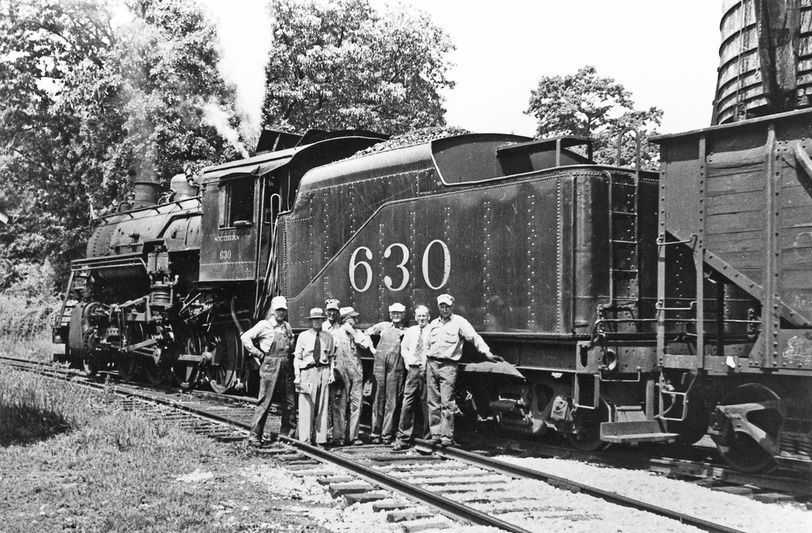
The railroad was extended to Lake Toxaway in the early 1900s, and the Toxaway Depot became the end of the line and the gateway to the extraordinary resort community developing around the new lake. (Grand Olde Station)
Visitors would eventually arrive by rail on their way to the magnificent Toxaway Inn, ushering in the Gilded Age chapter of Lake Toxaway history.
But the railroad, the Inn, and even the lake itself were newcomers.
For generations before them, these mountains had already been home, hunting ground, farmland, and refuge.
And that is what makes the history of Lake Toxaway so fascinating. Every chapter sits on top of another.
Today, when you visit Grand Olde Station, you're standing in a place connected not only to the railroad and the grand resort era, but to a much longer story of the people and landscapes that shaped this corner of Appalachia.
Come for the food. Stay for the story.


Comments